


How to Say Hello in Greek (And 30+ Other Greetings in Greek)

Full disclosure: This post contains affiliate links. ?
Γεια σου! (yia su!) is the usual way to say “hello” to one person informally in Greek.
It’s a useful start, but the greeting changes when you address someone formally or speak to more than one person, and the conversation will usually continue beyond hello.
Greek also has greetings that change with the time of day, along with different phrases for welcoming someone and saying goodbye.
As a long-time Greek learner and language writer, I’ll show you the most useful Greek greetings, introductions and parting phrases, with notes on when each one fits.
A note from the Fluent in 3 Months team before we get started: You can chat away with a native speaker for at least 15 minutes with the “Fluent in 3 Months” method. All it takes is 90 days. Tap this link to find out more.
Table of contents
- How to Say Hello in Greek
- More Greek Words for Hello
- How to Say “How Are You?” in Greek
- Meeting Someone New in Greek
- How to Say Welcome in Greek
- How Do You Say Hello in Greek Depending on the Time of the Day?
- Seasonal Greetings in Greek
- How Do You Greet Someone in Greek?
- How to Write “Hello” in Greek
- How to Say Goodbye in Greek
- Other Polite Phrases in Greek
- Start Using Greek Greetings
How to Say Hello in Greek
“Hello” in Greek is Γεια (yia). You hear people saying Γεια σου (yia su) or Γεια σας (yia sas) all the time.
The difference between them is simple: you use yia su to address one person, most likely your friend, someone you know well, or someone close to your age. You say yia sas when you’re greeting a group, a person you don’t know, or someone you respect due to their age or status.
| Γεια σου (yia su) | Γεια σας (yia sas) | |
|---|---|---|
| Is it informal or formal? | Informal | Formal (when used while addressing one person) |
| Singular or plural? | Singular | Both |
| Who can I use it for? (When singular) |
Friends and family members | Your boss, older people or someone you do not know |
More Greek Words for Hello
When greeting a friend, you also say yia su followed by their name. In a formal setting, you can say yia sas followed by Ms. or Mr. and their surname. That said, using yia su and yia sas on their own is also very common.
Here are some examples:
- Γεια σου (yia su): “Hello” (informal)
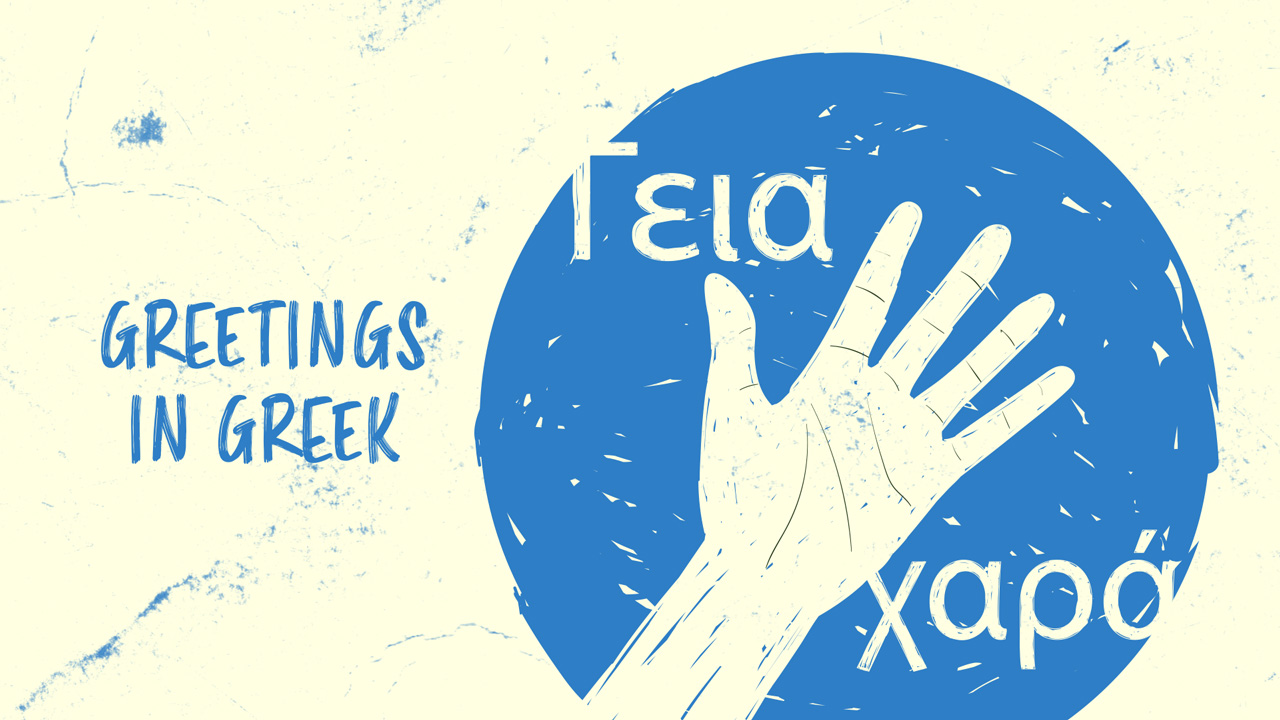
- Γεια χαρά (yia hara): “Hi there” or “Hey” (informal)
- Έλα! (Ela): “Hey!” or “Yo!” (also used when picking up the phone)
- Γεια σας (yia sas): “Hello” (formal or plural)
- Χαίρετε (herete): “Hello” or “Greetings” (formal)
- Γεια σε όλους (yia se olus): “Hello, everyone”
- Γεια σας, κυρία Ανδρέου (yia sas, kiria Andreu): “Hello, Ms. Andreu”
- Γεια σας, κύριε Ανδρέου (yia sas, kirie Andreu): “Hello, Mr. Andreu”
- Γεια σου, Άννα (yia su, Anna): “Hello, Anna”
- Γεια σου, φίλε μου (yia su, file mu): “Hello, my friend”
How to Say “How Are You?” in Greek
A “hello” can quickly lead to a “how are you.” In some cases, people might also start the conversation by saying ti kanis (“how are you”) instead of yia sou.
There are many different ways of saying “how are you” in Greek, depending on the formality level. Here are some of the common ones:
- Τι κάνεις; (Ti kanis?): “What are you doing?” or “How are you?” (informal)
- Τι κάνεις σήμερα; (Ti kanis simera?): “What are you doing today?”
- Τι γίνεται; (Ti yinete?): “What’s happening?” (informal)
- Έλα, τι κάνεις; (ela, ti kanis?): “Hey, how are you doing?” (informal, used between friends)
- Τι κάνετε; (Ti kanete?): “How are you?” or “What are you doing?” (formal or plural)
- Τι κάνετε σήμερα; (Ti kanete simera?): “What are you doing today?” (formal or plural)
- Τι νέα; (Ti nea?): “What’s new?”
- Πώς είσαι; (Pos ise?): “How are you?” (informal)
- Πώς είστε; (Pos iste?): “How are you?” (formal or plural)
- Καλά είμαι, εσύ πώς είσαι; (Kala ime, esi pos ise?): “I’m fine, how are you?” (informal)
- Καλά είμαι, εσείς πώς είστε; (Kala ime, esis pos iste?): “I’m fine, how are you?” (formal or plural)
- Πώς πάει; (Pos pai?): “How is it going?”
- Πώς σας πάει; (Pos sas pai?): “How is it going?” (formal or plural)
- Πώς περνάς; (Pos pernas?): “How are you doing?”
- Πώς περνά η μέρα; (Pos perna i mera?): “How is the day going?”
- Πώς περνά η μέρα σου; (Pos perna i mera su?): “How is your day going?” (informal)
- Πώς περνά η μέρα σας; (Pos perna i mera sas?): “How is your day going?” (formal or plural)
Meeting Someone New in Greek
When you’ve just met someone new, you might want to follow up your “hello” with a “nice to meet you.” Or if you haven’t caught their name yet, you might also ask it right after saying yia su.
- Πώς σε λένε; (Pos se lene?): “What is your name?” (informal)
- Πώς σας λένε; (Pos sas lene?): “What is your name?” (formal or plural)
- Ποιο είναι το όνομά σου; (Pio ine to onoma su?): “What is your name?” (informal)
- Ποιο είναι το όνομά σας; (Pio ine to onoma sas?): “What is your name?” (formal or plural)
- Από πού είσαι; (Apo pu ise?): “Where are you from?” (informal)
- Από πού είστε; (Apó pou iste?): “Where are you from?” (formal or plural)
- Με λένε… (Me lene): “My name is…” (Say me lene followed by your name.)
- Το όνομά μου είναι… (To onoma mu ine): “My name is…” (Say to onoma mu ine followed by your name)
- Χάρηκα (Harika): “Nice to meet you”
- Χαίρω πολύ (Hero poli): “Nice to meet you”
How to Say Welcome in Greek
Imagine that you’ve invited a Greek-speaking friend over for dinner. In this case, it will be more relevant to greet them by saying “welcome” instead of “hello” as they arrive.
- Καλώς ήρθες (kalos irthes): “Welcome” (informal)
- Καλώς ήρθατε (kalos irthate): “Welcome” (formal or plural)
- Χαίρομαι που είσαι εδώ (herome pu ise edo): “I’m glad to have you here” (informal)
- Χαίρομαι που είστε εδώ. (herome pu iste edo): “I’m glad to have you here” (formal or plural)
How Do You Say Hello in Greek Depending on the Time of the Day?
Like in many languages, greetings in Greek can also change depending on the time of the day. These include greetings such as “good morning” or “good evening.”
Morning
Kali and kalo are forms of “good” in Greek, while mera means “day.” Kalimera means “good morning” and is used from the morning into roughly midday, with local habits varying.
- Καλημέρα (kalimera): “Good morning”
- Καλημέρα σας (kalimera sas): “Good morning” (formal or plural)
Noon
Mesimeri is the middle of the day or lunchtime in Greek. Some smaller businesses close for part of the afternoon, though opening hours vary.
- Καλό μεσημέρι (kalo mesimeri): “Have a good afternoon” (usually a parting wish)
- Καλή όρεξη (kali oreksi): “Enjoy your meal”
Afternoon
Kalispera means “good afternoon” or “good evening.” Speakers switch from kalimera around midday or later in the afternoon, depending on local habit. Another word for afternoon is apogevma.
- Καλησπέρα (kalispera): “Good afternoon”
- Καλησπέρα σας (kalispera sas): “Good afternoon” or “Good evening” (formal or plural)
- Καλό απόγευμα (kalo apogevma): “Have a good afternoon”
Night
“Good night” in Greek is kalo vradi or kalinihta. These words are rarely used as a greeting — instead, you say kalo vradi or kalinihta as you leave a venue or go to bed. If you want to say hello to someone at night, you can use yia su or kalispera.
- Καλό βράδυ (Kalo vradi): “Good night”
- Καληνύχτα (kalinihta): “Good night”
- Καλησπέρα (kalispera): “Good evening”
Seasonal Greetings in Greek
Spending Christmas in Greece? Or Easter in Cyprus? Besides making yourself familiar with local traditions, you can also learn some festive greetings.
- Καλά Χριστούγεννα (Kala Christuyenna): “Merry Christmas”
- Ευτυχισμένο το Νέο Έτος (Eftihismeno to Neo Etos): “Happy New Year!”
- Καλό Πάσχα! (Kalo Pasha): “Happy Easter”
- Χρόνια πολλά (hronia polla): “Happy name day” or “Happy birthday”
- Καλό καλοκαίρι (kalo kalokeri): “Have a good summer”
- Καλές γιορτές (Kales yiortes): “Happy holidays”
How Do You Greet Someone in Greek?
You can greet someone in Greek with yia su informally or yia sas formally and in the plural. Kalimera and kalispera fit different times of day. Friends may greet each other with a hug or a kiss on each cheek, but follow the other person’s lead.
For people who have just met, it’s more appropriate to shake hands and use formal language, especially if they’re older. For example, instead of yia su it will be yia sas, or instead of pos ise (“how are you”), it will be pos iste.
How to Write “Hello” in Greek
Since the Greek alphabet is different from the Latin alphabet, learning how to read and write might take some time. To write the word “hello” for example, you use four letters:
- Γ (Γάμμα): “Gamma”
- Ε (Έψιλον): “Epsilon”
- Ι (Ιώτα): “Iota”
- Α (Άλφα): “Alpha”
In block capitals, it’s ΓΕΙΑ. In lowercase, it would be γεια, with the letter “gamma” slightly different from its capital letter version. If you add σας (sas) to the end, your γεια becomes formal or plural. If you add σου (sou), it becomes informal. That said, it’s also fine to use γεια on its own.
The block capital version of sas is ΣΑΣ, and for sou it’s ΣΟΥ.
How to Say Goodbye in Greek
Every hello has a goodbye. As we near the end of this article, let’s learn some words that mean goodbye in Greek.
- Αντίο (Adio): “Goodbye”
- Τα λέμε (Ta leme): “See you”
- Να προσέχεις (na prosehis): “Take care”
- Καλό ταξίδι (Kalo taksidi): “Have a good journey”
- Πρέπει να φύγω (Prepi na figo): “I’ve got to go”
- Καλή συνέχεια (kali sinehia): “Enjoy the rest of your day”
- Καληνύχτα (kalinihta): “Good night”
- Όνειρα γλυκά (onira glika): “Sweet dreams”
Other Polite Phrases in Greek
In addition to greetings, it is important to know about some polite expressions, especially in formal settings.
- Παρακαλώ (parakalo): “Please”
- Ευχαριστώ (efharisto): “Thank you”
- Ευχαριστώ πολύ (Efharisto poli): “Thank you very much”
- Συγγνώμη (signomi): “Excuse me”
- Παρακαλώ πολύ (parakalo poli): “You’re very welcome”
Start Using Greek Greetings
Saying hello in another language gives you a simple way to start a real exchange.
Choose the informal or formal greeting that fits, then add one follow-up question from the lists above. For more vocabulary, grammar and pronunciation practice, browse these recommended Greek resources.

Social